Coolant leak: how to find it, what causes it and what it costs to fix

It usually starts small. A damp patch on the drive that you put down to the air con. A sweet smell when you get out of the car. Then the coolant warning light comes on, or the temperature needle creeps up in traffic, and you realise the reservoir is half empty. A coolant leak is one of the most common faults we help people track down, and the good bit is that most of them come down to a hose, a clip or a cap.
Here's how to tell if you've got one, how to find where it's coming from, and what it's likely to involve.
Signs of a coolant leak
Coolant is a water and antifreeze mix, usually pink, green, blue, orange or yellow depending on the make. It has a sweet smell you'll recognise once you've noticed it. The giveaways:
- A puddle or drips under the front of the car, coloured and slightly slimy rather than clear like water from the air con
- The level in the expansion tank dropping between checks
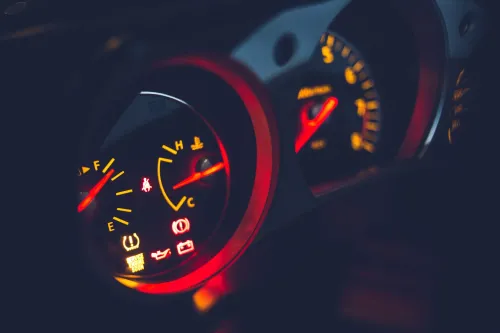
- A coolant warning light, or the temperature gauge reading higher than normal
- A sweet smell from the engine bay, or inside the car
- Steam from under the bonnet, or white crusty deposits around hoses and joints where coolant has dried
- Misty windows and a damp passenger footwell, which points to the heater matrix
Low coolant with no puddle anywhere is a different story. That can mean it's leaking somewhere hot enough to burn off, or leaking internally. More on that below.
What causes a coolant leak?
The cooling system runs under pressure and goes through hundreds of heat cycles a year. Rubber ages, plastic gets brittle, seals give up. In rough order of how often we see them:
Hoses and clips. The most common cause by far. Rubber hoses go soft or crack with age, and clips loosen. Squeeze a hose when the engine is cold. If it feels spongy or crunchy, it's on its way out.
Radiator. Many modern radiators have plastic end tanks crimped to an aluminium core. The joint between the two is a classic weak spot, and stones can damage the core itself.
Water pump. Pumps have a small weep hole that lets coolant out when the internal seal starts to fail. A crusty trail below the pump, or a drip from that area, is a good sign the pump needs replacing. On many engines it's driven by the timing belt, so it's often done at the same time.
Expansion tank and cap. Plastic tanks crack, especially around the seams. A cap whose seal has gone won't hold pressure, so coolant gets pushed out as it heats up. A cap is one of the cheapest parts in the system, so it's worth ruling out early.
Thermostat housing. Often plastic on newer engines, and prone to cracking or a failed gasket.
Heater matrix. It sits behind the dashboard. A leak here shows up as fogged-up windows, a sweet smell in the cabin and a wet carpet.
Head gasket. The one everyone worries about, and the least likely. Signs are white smoke from the exhaust that smells sweet, bubbles in the expansion tank with the engine running, and coolant loss with no outside leak at all.
How to find a coolant leak
Always start with the engine cold. The system is under pressure when it's warm, and opening the cap on a hot engine can spray scalding coolant at you.
Clean up the engine bay first, then park on clean, dry ground overnight and look at where the drips land in the morning. That narrows it down a lot. Follow the trail upwards with a torch, looking for wet patches, dried crystals and stained hoses. Check the hose ends and clips, the radiator seams, the pump and the tank.
If you still can't see it, a garage can pressure-test the system. They pump it up to working pressure with the engine cold and watch for the drop, which often makes a slow leak show itself. A UV dye in the coolant and a UV torch does the same job for really small leaks. For a suspected head gasket, a combustion leak test checks the coolant for exhaust gases.
Can you drive with a coolant leak?
A short distance with a slow leak, if you keep the level topped up and watch the temperature gauge, usually yes. Anything more than that, we'd rather you didn't. An engine that runs low on coolant overheats, and overheating is what warps cylinder heads and blows head gaskets. That turns a cheap hose into a very expensive repair.
If the gauge goes into the red or the warning light comes on, pull over somewhere safe, switch off and let it cool. Don't keep driving to get home.
What does it cost to fix a coolant leak?
It depends almost entirely on where the leak is. A hose, a clip or an expansion tank cap is cheap and often a job you can do on the drive. A thermostat housing or an expansion tank is a bit more. A radiator or water pump costs more in parts and labour, especially when the pump sits behind the timing belt. A heater matrix is usually a big labour job because the dashboard may need to come out. A head gasket is the most expensive of the lot.
That's why finding the exact source matters before you buy anything. Replacing a radiator when the real problem was a perished hose next to it is money down the drain.
About stop-leak products: they can buy you some time on a tiny weep, but they're a temporary fix at best. They won't seal a failed pump or a head gasket, and they can block the heater matrix and radiator.
Topping up with the right coolant
Once it's fixed, refill with the coolant type your car's maker specifies. The colour alone doesn't tell you the type, and mixing different types can cause sludge in the system. Your handbook will list it, or we can check it from your VIN. Some engines also need the system bled to get air out, otherwise you get hot spots and a heater that blows cold.
One last thing. Coolant tastes sweet and is poisonous to cats and dogs, so clean up any spills and don't leave old coolant lying around.
Getting the right part
Cooling parts are very model-specific. Hoses come in shapes for one engine only, and radiators and pumps change between years and versions of the same car. We stock genuine and properly-made cooling parts for all the major brands, and we'll match them to your car so you only fix it once.
Found your coolant leak?
Send us your VIN and tell us which part is leaking, and we'll find the exact hose, pump or radiator for your car.
Know the part number?
Enter a part number and we will take you straight to it.