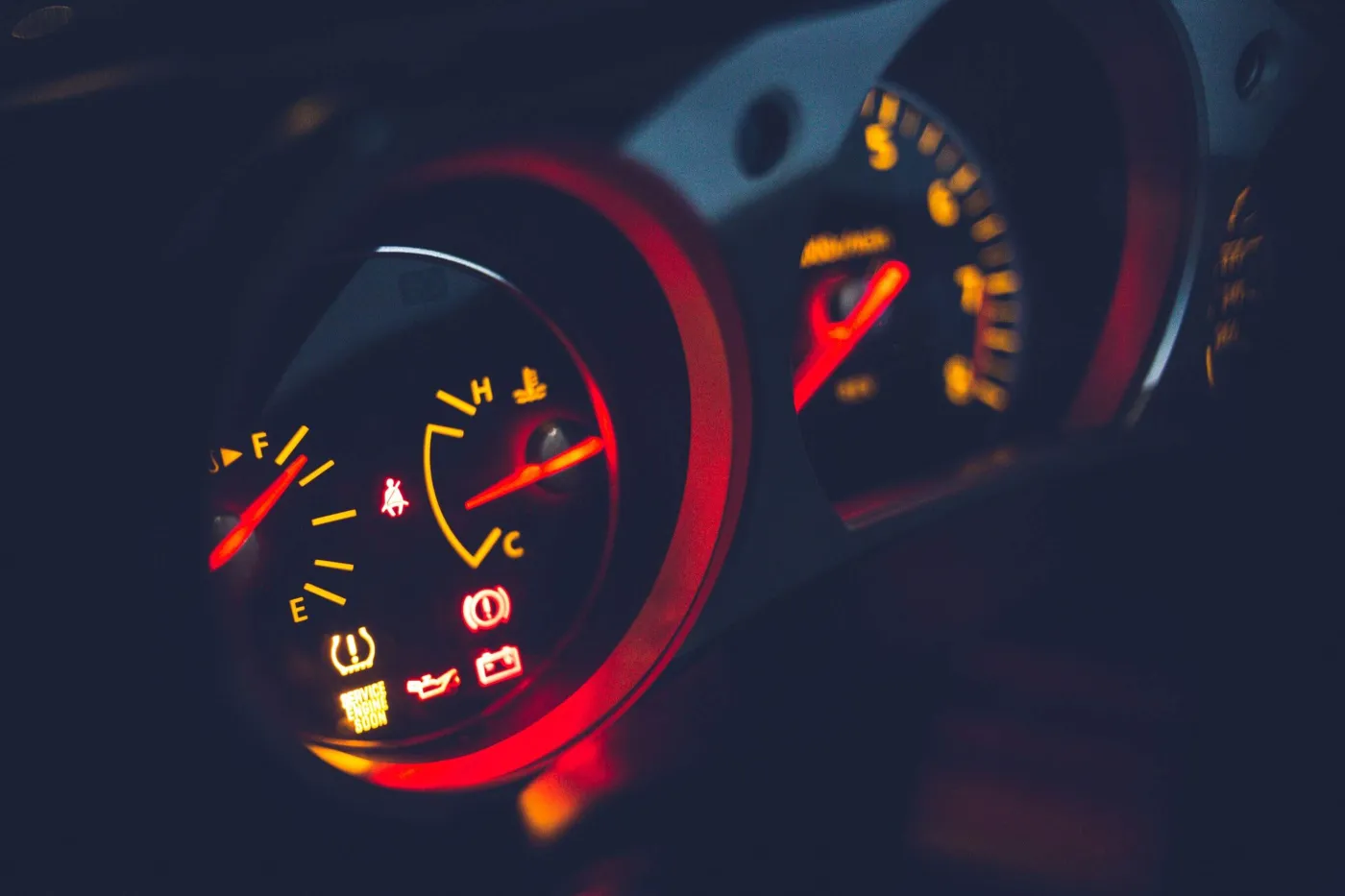
A light pops up on your dashboard and your heart sinks a bit. Can it wait until the weekend, or does it mean pulling over right now? We've all been there, squinting at some little orange symbol and hoping it quietly disappears.
Here's the thing, though. Your car is on your side. It's trying to tell you something, and once you know how to read the lights you can tell a nag from a real warning in seconds. You don't need to be a mechanic for any of it.
It starts with the colour
Think traffic lights, because that's more or less what the car is doing. Red means stop and deal with it now. Amber or orange means get it looked at soon, though you're usually fine to carry on carefully for a bit. Green or blue is just the car letting you know something's switched on, like your headlights or cruise control. And it's the same story whether you drive a Ford, a Fiat or a BMW, so the colour is the first thing to clock. It tells you how worried to be before you've even worked out what the symbol is.
The lights that flash up when you start the car
Start the car and you'll see a handful of lights blink on for a second or two, then go out. That's meant to happen. The car runs a quick check of its main systems as it wakes up, and once the engine's running they should clear. What matters is the light that doesn't go out, or one that shows up later while you're driving. A light that flashes on and then off has done its job. A light that hangs around is the one worth listening to.
Red lights: don't ignore these
Red is the car asking you to actually do something. The big ones are oil pressure, usually a little oil can, engine temperature, the battery or charging light, and the brake warning. See one of these on the move and you want to find somewhere safe to stop, not push on and hope for the best. An engine low on oil pressure or running hot can wreck itself in minutes, and a brake warning is exactly what it sounds like. The airbag light is red too. It won't strand you, but it means your airbags might not go off in a crash, so don't sit on it.
Amber lights: get it checked soon
Amber lights are the ones you'll see most, and the famous one is the engine management light, or check engine light. It covers everything from a loose fuel cap to a dying sensor, so it's not always a drama, but it's not something to shrug off for months either. The ABS light, the tyre pressure warning and the traction control light live in this group too. You can usually keep driving, but get the fault read before long. A garage will do it, or you can plug in a cheap code reader yourself, and either way you go from a vague worry to knowing exactly what's wrong.
Warning light traced to a faulty part?
Send us your VIN and the fault, and we will help you find the exact part for your car.
A flashing light is a different story
One big exception to the calm amber rule. If the engine management light is flashing instead of glowing steadily, don't treat it as a soon job. A flashing one usually means a misfire, with unburnt fuel dumping into the exhaust, and that can cook the catalytic converter in short order. A cat is not a cheap part to put right. Ease off the throttle, bring your speed down, and get somewhere safe or to a garage as soon as you sensibly can. Steady amber says soon. Flashing says now.
What to actually do
So, the short version. Red, stop and check. Amber, don't panic but get it seen to soon. Green or blue, you're good to carry on. And trust your other senses while you're at it. If a light comes on alongside a new noise, a burning smell, a buzzer, or the car dropping into a sluggish limp mode, take it seriously whatever colour it is. Those signs tell you as much as the symbol does. When in doubt, checking is always cheaper than guessing.
From light to fix
A lot of warning lights end the same way, with a part that needs replacing, whether that's a sensor, a battery, brake bits or something in the ignition. That's where we come in. Search SimpleSpares across all the major brands, match the part to your car by VIN so it fits first time, and we'll ship it wherever you are. Fix the fault, not just the light.
Frequently Asked Questions
-
Usually yes, if it is a steady amber light and the car feels normal, but get the fault read soon rather than leaving it for weeks. If the light is flashing, or the car is running rough or lacking power, ease off and get it checked straight away.
-
No. Treat a red light as stop and find somewhere safe to pull over as soon as you can. Things like low oil pressure or an overheating engine can cause serious damage within minutes, so it is not worth pressing on.
-
A light that flashes up when you start the car and then clears is normal, that is just the self-check. One that comes and goes while you are driving is worth getting read, because it often points to an intermittent fault that will come back.
-
A code reader can clear the code, but if the underlying fault is still there the light will simply come back on. It is better to fix the cause than to reset the symptom.
-
Some will. Warning lights for the airbags, ABS and brakes are checked as part of the test, so one showing for those can mean a fail. It is worth sorting them before the car goes in.